Most managers were promoted because they were good at the work. Nobody showed them how to ask a struggling employee what’s wrong, give feedback that lands, or run a meeting where people say what they think. I train managers in practical communication skills and dialogue tools, then show them how to pass those tools on to their own teams.
For new and experienced leaders who want to build teams where people feel safe to speak up.
A wellness program can only do so much if the person someone reports to can’t have an honest conversation. Here is what that gap costs.
52% of people who quit say their manager or organization could have done something to keep them. Source: Gallup, 2019
A manager who doesn’t know how to ask misses the early signs. They find out when the doctor’s note or the resignation letter arrives.
People will put up with a heavy workload far longer than a manager they can’t talk to. High turnover often traces back to one relationship.
When speaking up has gone badly once, people stop. Mistakes stay hidden, ideas go unsaid, and absenteeism creeps up.
Open questions that get past “I’m fine” and invite a real answer in one-to-ones and check-ins.
How to stay with what someone is telling you before reaching for a solution, so they feel heard first.
What employee burnout looks and sounds like in the early stages, and how to open that conversation with care.
Feedback, workload, conflict, and performance, handled directly and respectfully, without avoiding or steamrolling.
Meeting habits and everyday responses that build psychological safety and show people their honesty is welcome.
How to lead a dialogue session with your own team, so the skills spread well beyond the training room.
I’m a Points of You® Trainer, and I use its photo-based tools throughout this training. A photograph and a good question can open a conversation that a direct question would shut down. People describe what they see in the image, and end up saying what is true for them.
An image becomes a metaphor, a question opens a door, and suddenly people are talking about what really matters.
I introduce leaders to the Points of You® ClicKit and Speak Up tools and show them how to use them with their own teams, in one-to-ones, in team meetings, and in the moments when something difficult needs to be said.
Training managers is half the job. The other half is making sure what they learn reaches the people they lead.
Managers go through the dialogue tools as participants, so they know how it feels to be on the receiving end.
They rehearse in pairs and small groups, working on real conversations they have coming up.
Each manager runs a dialogue session with their own team, using my guide and with my support.
Depending on the program, we can meet again to look at what worked and what to try next.
An introduction to dialogue tools and the core skills of asking better questions and really listening. A strong start for a leadership team, or a first step before a longer program.
The complete skill set, with extended practice on spotting burnout early, feedback and difficult conversations, and time for each leader to plan a real conversation they need to have.
Training spread over several weeks. Leaders practise with their own teams in between sessions and bring back what happened. This is where new habits really stick.
Groups of up to 20, so everyone gets real practice time. Every program is customized to your team’s needs and budget.
The aim is a team where concerns are raised early, where burnout is caught before it becomes a leave of absence, and where people stay because they feel heard.
Those outcomes show up in numbers you already collect.
Give a manager one good question and the confidence to ask it, and the whole team feels the difference.
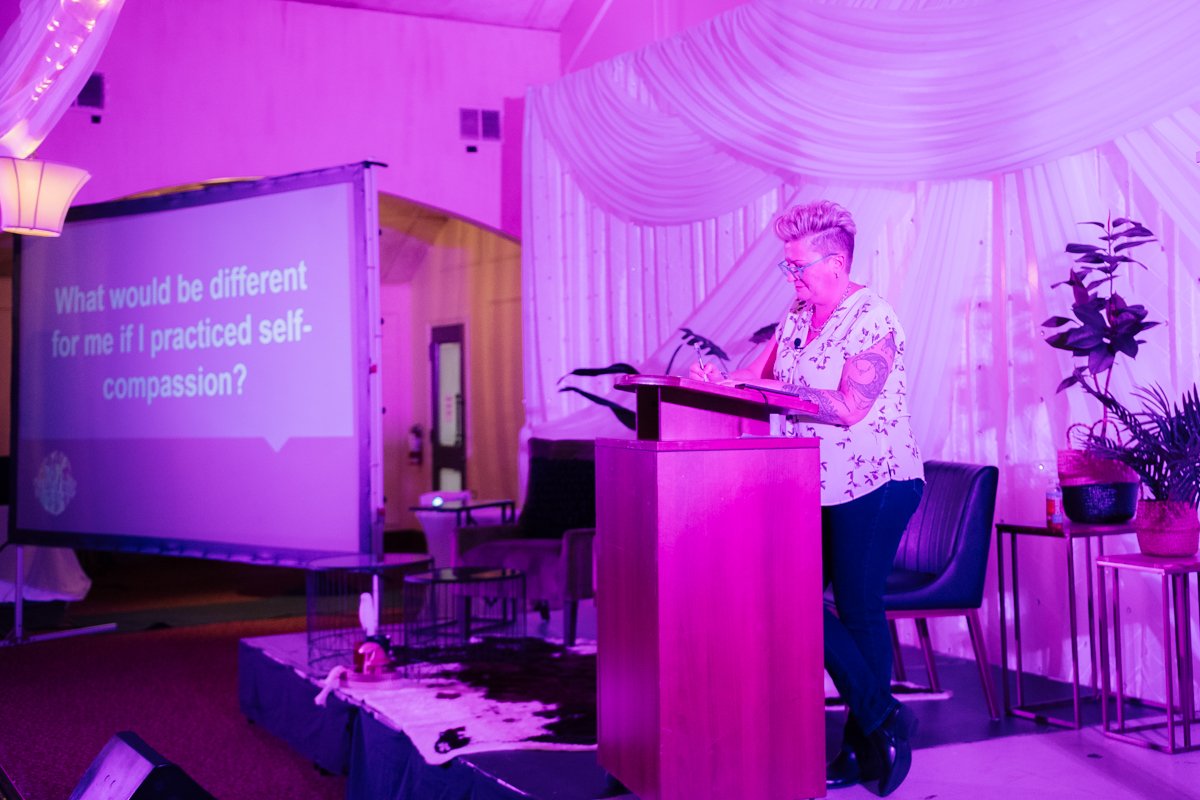
Sometimes one room and one hour is the right first step. My keynotes and presentations are honest, relatable, and built from real experience. They work for conferences, leadership offsites, town halls, and wellness weeks.
A single talk that gives your people language for what they’re feeling and one thing to do about it.
Many organizations launch team sessions or manager training with a keynote, so everyone hears the same message on day one.
If your team is already exhausted, start with a team wellness session.
On site with your team in Durham Region, Clarington, the Greater Toronto Area, and across Ontario.
Live online sessions for remote and distributed teams anywhere in Canada.
A mix of both, such as an in-person launch followed by virtual sessions.
Have a question I haven’t answered? Just ask.
Anyone who leads people: new and experienced managers, supervisors, team leads, and the HR partners who support them. Mixed groups work well, because managers learn a great deal from each other. Groups are kept small enough that everyone gets real practice time.
Managers don’t only learn the tools for themselves. They learn to lead a dialogue session with their own team, using a guide I provide, so open communication becomes part of how the team works.
They are photo-based tools that use images and questions to start honest conversation. I’m a Points of You® Trainer and have used them with groups since 2018. They move through four stages: Pause, Expand, Focus and Doing. They work especially well with people who find it hard to open up.
It depends on the format, group size and number of sessions. I’ll send a custom quote after a short discovery call.
Yes. Supervisors in social services, nonprofits, and frontline teams lead people who carry a heavy emotional load. The same dialogue tools apply, and I adapt the examples to the realities of that work.
Yes. It runs in person, virtually, or as a hybrid. The practice sessions are just as hands-on online, using breakout rooms and digital versions of the tools.
Up to 20 leaders per group, so everyone gets hands-on practice. Larger organizations can run several groups.
Tell me about your leaders and the conversations they’re finding hardest. I’ll suggest a format that fits.
Prefer to have me work with your team directly? Explore team coaching.